Showing posts with label Halo. Show all posts

Thursday, March 1, 2018

Hydrogen peroxide could save your dog's life.

Does your dog ever eat things they shouldn't?
Ahahaha! Silly question.  It's a dog!  The answer is almost 100% surely "yes".
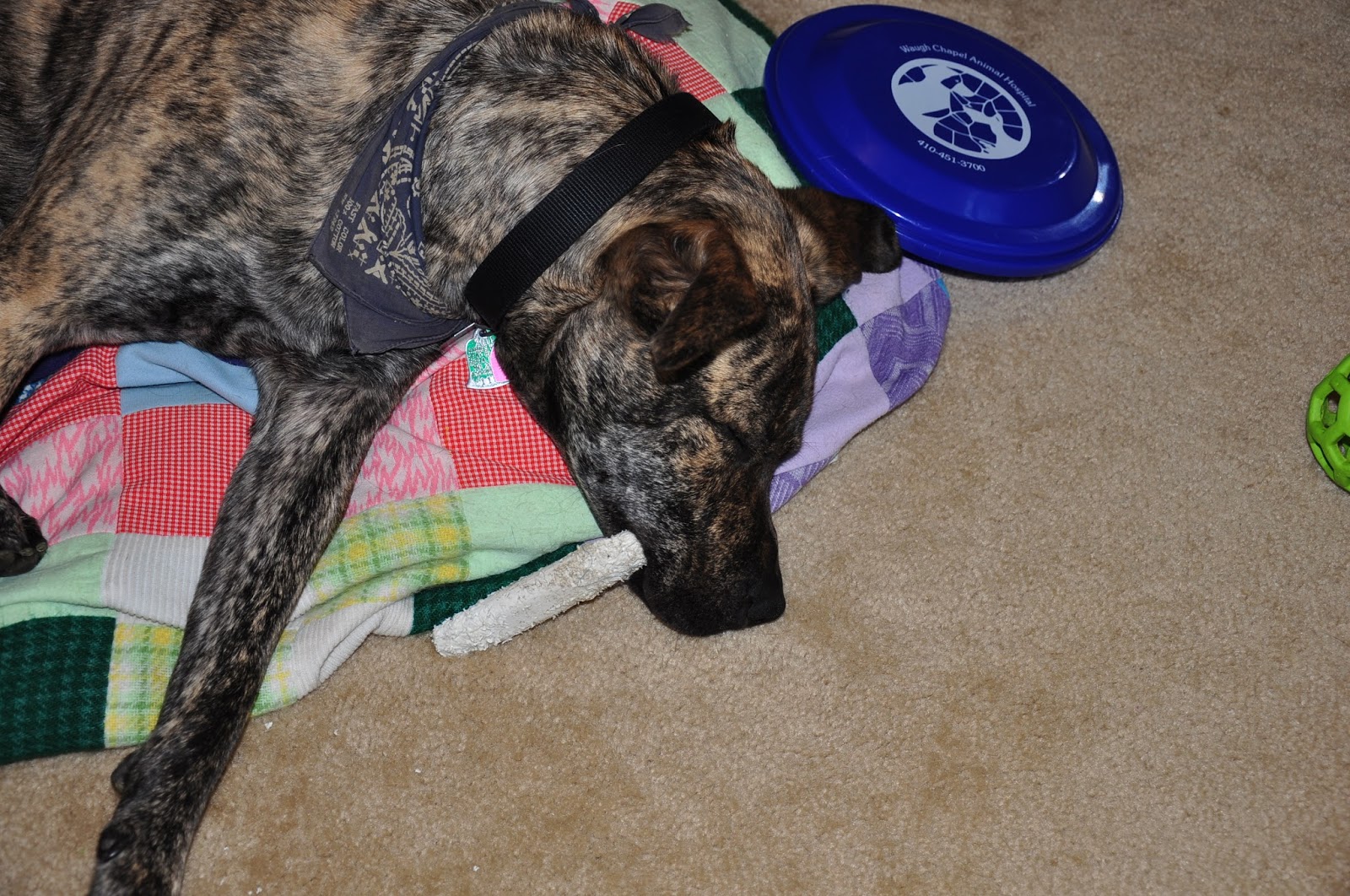
BUT, does your dog ever eat things that could harm them or even kill them?  Not all dogs have this problem (Leopold, for example, is pretty good about just eating food... and grass... and maybe cat poop).  But some dogs just can't help themselves.  Like Halo....

We've always had issues with Halo eating things that she shouldn't.  She's gotten better, but there have been times where she seems like a canine vacuum cleaner for anything and everything within reach: her bedding, sticks, bugs, compost, important bills and documents, cardboard (especially cardboard)....  She knows enough to not eat these things when we're around, but when we're out of site, all bets are off.  It's caused problems and rather large vet bills.

To be honest, it had been a while since Halo had really gotten into anything she shouldn't.  She's even pretty good about not eating sticks now.  But... then the holidays rolled around... 
When I worked at a veterinarian ER, the holidays were always associated with an increase in dogs visiting our clinic because they ate something that could potentially harm (or kill) them.  Human treats containing chocolate and raisins being the big offenders, of course.  This past holidays season was the first year we had this issue with our own dog.

Incident #1 was some fish-leather that I had left out to dry after tanning.  I should have known better to leave the skins so accessible, but the "dog area" is also my work area and I was feeling optimistic because I had been tanning fish skins for weeks and leaving them out to dry in a Halo-accessible area.  But then I came home from a morning of errands to discover all but one of my skins were missing.  There were foul words said, despite being in the presence of my toddler, and I stood there, dumbfounded.  That was a lot of fish-leather she had consumed.  I was worried about risk of blockage.   

Incident #2 was two whole dark chocolate bars -- the really fancy ones that also help save the rainforest.  My husband had done a little Christmas gift-wrapping the night before: chocolate and fishing lures.  And in the depths of Christmas chaos and late-night fatigue, he left them sitting on the coffee table.  Halo helped herself to what, I'm sure, she thought were special Christmas gifts just for her.  Again, I came home from errands to discover she had gotten into something she shouldn't.  Chocolate wrappers and wrapping paper all over the place.  Thankfully, she didn't eat any of the fishing lures, though I was pretty freaked for a bit b/c she had chewed up all the packaging :-O.

Incident #3 was also chocolate -- some really special and fancy stuff that my parents brought all the way from my hometown in Wisconsin.  We got home from some family outing and we had barely come in the door when my husband realized what had happened and shouts to me, "Get the stuff!"  Again, we should have known better, but in the Christmas chaos, we weren't thinking, and the chocolate got left in my husband's office area, which is also part of the "dog area".

Luckily, in all three of these incidences, we were able to deal with the situation fairly easily at home instead of taking Halo to see a vet.  How?  By inducing vomiting in order to force Halo to puke up the offending material.  

Why am I telling you all this?
Partially because I have a tendency to over-explain...
But mostly because I wanted to talk about what you can do in situations like this and why it's a good idea.
The faster you get whatever your dog shouldn't have eaten out of their gastro system, the better.  If you wait too long, it could move on out of the stomach and then require surgery if it's a "foreign body" (indigestible, non-food item), or it could be absorbed and cause toxicity and possibly death (grapes, raisins, onions, chocolate, gum with xylitol, antifreeze, rat poison, etc.....).  There are situations where you might not want to induce vomiting; for example, if your dog ate something needle-like that could cause further damage if brought back up (There was once a dog come into our clinic that had eaten a holiday candy display and had to have a ton of pins removed from it's gastro system. Eek!).
But in most cases, inducing vomiting at home can help save your dog's life or at least save you some hefty veterinary bills.  

So, how do you induce vomiting in a dog at home?
Hydrogen peroxide!

In addition to a turkey baster and measuring spoon, I also use
a bowl of some sort (I grabbed my pyrex this day apparently)
to put the measured H2O2 into.  The turkey baster will most
likely end up with dog saliva on it, and I really don't want that
in my bottle of H2O2.  
A quick google search will tell you to use 1 tsp of hydrogen peroxide for every 10 lbs of dog.  
Halo is about 55lbs, so I used 5.5 tsp of hydrogen peroxide every time I needed to force her to puke.
I also used a flavor-injector syringe (without the needle of course!) or turkey baster.  Anything to get the hydrogen peroxide to the back of her throat to force it down.  
The way I force Halo to drink hydrogen peroxide is squirt it in the back of her throat while her head is tilted up, and then I hold her mouth shut until she swallows.

The hydrogen peroxide will make a dog's mouth a bit foamy, so don't worry if that happens.  If they don't puke in the next 15 minutes, you can repeat the dose one more time.  If they still don't puke, take them to the vet ER.  Do not repeat another dose!  Another dose could cause more problems than do good.  The vet ER will most likely use apomorphine, which gets dripped in the dog's eye and then washed out once the dog has puked up whatever they shouldn't have eaten. 

But if they do puke up the offending material, all that's left to do is let loose a huge sigh of relief and maybe clean up a little puke--I recommend doing all this outside, by the way, but I also recommend either spraying the vomit with the hose to disperse it or grabbing a poo-bag to pick it up.  Basically, you just don't want your dog to re-consume their vomit, which we all know dogs will do.  (Dogs can be so gross...).

I'd say don't worry about memorizing the dosing:  Personally, I can never remember the how much hydrogen peroxide to give and how long to wait.  I always just google it when I need the information.
The important part is to have the hydrogen peroxide and syringe or turkey baster on hand.  If you're a dog owner, I highly recommend you have these things handy in your house just in case.

Hydrogen peroxide is so cheap -- like one of the few things you can still get for a dollar (ok ok, more like $1.50, but still!).  And turkey basters aren't a huge investment either.  Here's one on amazon.com that's just a little over $5 (at the time of this post, anyway):  Meat And Poultry Baster
And if you're feeling lazy, you could always order hydrogen peroxide from amazon.com too:  Hydrogen Peroxide Antiseptic Solution 16 Oz
Don't have measuring spoons? First, that's weird... Second, here's some incredibly cheap ones you can do as an "add on" on amazon.com: Prepworks by Progressive Snap Fit Measuring Spoons - Set of 5
And I'm just going to assume you have a bowl or cup or some sort of vessel you can measure the hydrogen peroxide into ;-)

I hope you never have a reason to induce vomiting in your dog, but if such a situation does arise, I hope that now you feel a little more prepared to deal with it!


Convenient product links:


Sunday, March 5, 2017

Last night I was told that turkey can kill my dog.

Leopold eyeing up some leftover turkey from last night.
Deep fried myths.
Last night my husband and I threw a "fry party", where we heated up a deep fryer in our back yard and guests came over with ingredients of their choosing to drop in the vat of peanut oil.  It was a night of indulgence for sure.  My favorite fried goodies included oreos, bananas, and the large turkey my husband prepared.

At one point Leopold was eyeing up that turkey (and by eyeing up I mean sniffing awfully close!).  I don't blame him. It smelled good and tasted better.  A couple of the guests were watching and said something to me, in what I thought was jest, about how turkey can hurt dogs.  I laughed and said "Leopold seems to disagree".  They then proceeded to tell me that turkey can, actually, kill dogs.
I responded by saying "What? That's not true".
 Yes it is, they said.  Tryptophan, they said.  Then they told me of their relative who's dog ate a bunch of turkey and turkey fat and then died from pancreatitis.  (which is very sad)


I hope I didn't come off as rude to the well-meaning guests, but in my years working with dogs in both a professional and personal setting, I have never once come across that little factoid.

And that's because it's not... actually.... true....
(sorry, friendly guests!  Either your information is outdated or just...er... false. =/  )

Online myths propagation.
I'll admit that I was terribly afraid that I was wrong. So I did some research online.

I did find articles and blog posts about the dangers of turkey.  "Skip the turkey at Thanksgiving for your dog!", stuff like that.  Or this one from NBC that contained a subheading "Toxic Turkey" and advised people to "Refrain from giving any part of the beautiful bird to your cat or dog".
(NBC.... come on man....)

But the articles that made claims about turkey toxicity had no cited references.  No quotes from veterinarians.  So, I'm not sure where they were getting their information--possibly other websites that were getting their information from other websites that were getting their information from a random stranger who claimed turkey killed their dog.  (Apparently if enough people believe something, that makes it true.  ...Except that it doesn't.).

The articles I found that did have any sort of clout explained that turkey, as a meat, is fine to give to dogs.  In fact, it's a high quality protein source.  That's why you can find it as an ingredient in some dog foods.  In fact, "smoked turkey" is on the list of ingredients in the kibble I feed MY dogs -- Taste of the Wild, Wetlands recipe.

So what's the poop?
The poop is that sometimes the manner in which the turkey is given to a dog can cause gastrointestinal upset and in some cases pancreatitis.  It's not the turkey, it's the fact that a dog isn't used to eating turkey, and/or the fat content of the turkey tidbits they're eating is too high (the skin has quite a bit of fat in it, for example).

Thanksgiving is often the time we give our dogs turkey, or maybe even a whole meal comprised of the different delicious dishes we, ourselves, enjoyed.  Thanksgiving turkeys and side dishes are more likely to be decadent, full of extra butter and oil.  At least that's how it is in our house...  Most dogs don't eat this kind of food on a daily basis, and therein lies the problem.

Have you ever tried to switch your dog's kibble to a new brand or a new recipe?  If you try to switch outright, the result is a sick doggy who probably needs to be let outside many many times if you're luck or hours of cleaning for you... (ew.....)!  To switch a dog's food, you're supposed to slowly introduce the new food over time, gradually adding more of the new and less of the old over ten or so days.  And switching dog food brands/recipes is a much more innocuous event than is offering Thanksgiving leftovers.
Imagine, then, that the Thanksgiving meal you're giving your dog is not only atypical to their diet, but is very possibly higher fat that normal.  There's a good chance that it's not going to sit well.  And in some cases can result in pancreatitis and even death, such as the case my guests were relating to me.

What about tryptophan?
Tryptophan is an amino acid found in turkey.  And tahini.  And yellow mustard seed.  And parmesan cheese.  And seaweed....
It does not kill dogs.  It doesn't harm dogs.  In fact, there are even supplements on the market that use tryptophan specifically for dogs to help relieve anxiety (research suggests these supplements don't work...).
If you want to know more, I found this great science-based article online that gives the rundown of tryptophan and dogs.
I'm not sure why my guests thought tryptophan was the blame for the pancreatitis of their family's dog.  I hope their vet didn't tell them that...!

Moral of the story.
Turkey does not kill dogs.  Tryptophan does not kill dogs.

BUT, be smart about the little extras you give your dog.  Is your dog on a low-fat diet? Don't suddenly give them a bunch of fat.  Does your dog never get to eat "people food"?  Don't suddenly give them an entire meal of "people food".  Also, it's a good idea to cover and put your leftovers away so that your dog doesn't sneak onto the counter and help himself.

PetMD.com has a great article that gives easy guidelines on how to safely share your special holiday meals with your dog.  And if you're worried about the fat content of the turkey you're giving your dog (for example, if you deep fried it....!), then maybe boil it in water first to remove some of the fat.

yes... yes... I did give Leopold a taste of turkey.  Halo, too.  How can I say no to those faces??


I did research online to write this article.  Part of feeling confident in the information I present to you, my reader, is knowing what to look for in an article that tells me it's a reliable source.  Interested in learning how to research dog-related topics (or... any topics, really), for yourself?  Stay tuned.  I'll work on that blog post next.

Wednesday, February 15, 2017

Have a short-haired dog? This brush is perfect for grooming!

Leopold sniffs a ZoomGroom


Short hair stumped

My childhood dog, Max, had medium-ish fur.  We used a human bristle brush to brush his fur, and it worked great.  We'd brush him, the brush would fill with fur, we'd pick the fur out and throw it away or toss it in the wind, and then repeat.  Fun for a kid.  (Even funner was shedding season-- lots of "pick-ables" to pull right off his rump...!)

Leopold, however, has short fur.  One layer. No undercoat.  Short and bristly.
When I first got him, I was kind of at a loss on how to brush him -- and I really wanted to brush him because the more loose fur I got out with a brush, the less would end up on my floor... and on my clothes... and in my food...

I tried all sort of brushes including fine-tooth combs and even a brush meant for horses (ha!).  None of those worked very well, though.  I was stumped.


Brush discovery

knobby brush
And then I started volunteering at a vet clinic.  The clinic started me out with brushing dogs. Yep. That's all I came in for: brushing the dogs they were boarding. Hey, you got to start somewhere, right??

The clinic had a great arsenal of brushes, and one of them was the answer to all my short-hair fur problems: the ZoomGroom.  It was not a brush in the traditional sense; it was more like a knobby piece of silicone that could be used to push loose fur out of a dog's coat (as opposed to pulling it out like traditional brushes and combs).  And once I discovered how well it worked, I bought one for myself and have needed no other brush since.

It works well on Halo, too, who has longer fur and an undercoat.  The product description says that it works for all coat types, though I can't speak to that because I've only used it on dogs with shorter fur.  And there are lots of brush choices for long hair dogs, so who cares.  Finding a brush that actually worked on short-hair dog is all I cared about!


fur pile pushed out by a ZoomGroom!

Advantages of using the ZoomGroom

1.  It works SO well!  I'm really amazed at the amount of fur I get out with this brush.  And fast!  Though... somehow we always seem to still have dog hair tumbleweeds rolling through our house.  I can only imagine how bad it'd be if we didn't brush our dogs!

2.  Can be used to help with baths.  This brush is great for scrubbing a dog really well and really working in shampoo.  Fingers work to lather a dog, but the ZoomGroom works better.

3.  Easy to clean.  Not a lot of hair gets stuck in the brush, except sometimes when it gets used during doggy baths. I just run it under some water, though, and the hair washes right out.  And because the knobs are so far apart, the brush doesn't really retain any water so it dries quickly.

4.  Massages your dogs while you brush.  This is a feature that I love!   The knobs are big enough and spaced far enough apart that they also massage your dog as you apply gentle but firm pressure to push loose fur out.  I've tried it on my own skin -- it feels nice!  The fact that this brush also massages helps make brushing my dogs a bonding activity.  My dogs were a little unsure of the brush when I first introduced it, but after some sniffing and a little brushing, they decided they love it.  Both of my dogs sort of melt when I start brushing them.  And then their eyes start to close in that contented sort of way. You know what I'm talking about--The look of a happy and relaxed dog.


The only disadvantage, really, is that the brush doesn't collect the hair, like traditional brushes do.  It might gather some, but most of the hair get pushed out of the coat and onto the floor.  This is why I like to brush my dogs outside.  Then the hair just blows away and gets recycled back into the ground (eventually).  When I do brush them inside, I like to work the fur into a little pile on their rump and then scoop it all off at the end. But you know... do what works for you.

There are other rubber/silicone brushes out there, also.  I have one that fits over my hand as a mitt and has smaller teeth-- I think it's Petmate brand.  I don't like it as much as the ZoomGroom.  I haven't tried some of the other brands.  If I do, I'll report back.  But for now I'm quite pleased with my ZoonGroom.

Think your dog would benefit from a ZoomGroom?  I've seen them at most pet stores.  The brand is Kong.  Otherwise, you can buy one here from amazon.com: KONG ZoomGroom, Dog Grooming Brush

Happy Grooming!

Also, this:


Convenient Product Link:


Saturday, January 21, 2017

Do you need to trim your dog's nails? Probably.

I took Leopold to a low-cost vaccine clinic last month to get him updated on his rabies vaccine.  While I was waiting (and I had to wait a while...), I enjoyed some small talk with other fellow dog-owners who were also waiting around with their pups.
One lady had a pair of adorable shitzu puppies: one was taking a pup-nap (I'd say cat-nap, but that just seems wrong) in it's little stroller, and the other was snuggling with it's owner.
Apparently the snuggling pup had long nails, because the owner complained more than once about how sharp they were.  She said she wasn't sure if she should cut them, and that her veterinarian told her the nails would wear themselves to a short length just by the pup running around outside.

I wanted to laugh at the veterinarian's advice.  But I didn't.
So I'll laugh now.  AHAHAHAHAHA!

Woooo...! It feels good to laugh.

Halo enjoying a mid-afternoon nap.  Or was this her morning
nap...? Maybe her late afternoon nap?? I can't remember!
In my experience, most dogs need to get their nails trimmed by their owner (or a professional if the owner can't do it).  It's true that some dogs run around enough outside for their nails to self-maintain at the proper length, but it's rare.   In the four years I worked at an emergency veterinary clinic, dogs that came in with naturally trim nails were the exception, not the rule.  The truth of the matter is that a lot of dogs spend a good chunk of the day napping or just lazing about. According to an article on sleep.org, the average dog spends about 50% of the day sleeping and another 30% lying around awake.

Sounds about right for my pups!  I let Leopold hang out in our back yard as often as he "asks" (so long as it's not too hot outside) and he'll wander around and sniff things, but mostly he's incredibly content to just lay in the sun and sniff at the wind or take a nap.  He likes to run and play, too, and we make sure he gets exercise every day, but the majority of his day is spent deciphering smells on the breeze, woofing at passing cars, and catching Zs.  Halo prefers to be where the humans are, so she ends up spending her time inside a lot.  But she, too, naps a lot.  There's stuff for her to do and she'll chew on a bone or toss around a toy if she feels like it, but again, she doesn't run around enough for her nails to self-maintain to a proper, short length.  

Leopold's nails could use a trim.  Ideally,
I would trim his nails regularly enough that
they don't touch the ground at all.  His nails
are a little long here!


Of course, the best way to know if your dog's nails need a trim is to look at them.  Do they touch the floor when they walk?  If yes, then they're probably too long and need a trim.  Do they cause your dog's toes to push out in funny angles?  If yes, then you definitely need to trim those nails and stat!  If you don't, your dog's nails could grow into their paw pad, which is very painful and could potentially result in an infection.

Having trouble trimming your dog's nails because your dog won't let you?  Check out this post for some tips on trimming your dog's nails.

Leopold partaking in his favorite activity: sun-bathing while sniffing the wind.

Wednesday, April 16, 2014

Off-leash dog charges at my dogs. Part two.

I've shared some stories before about off-leash dogs that have come charging at me and my own dogs. Feel free to ready part one here.
Well, I have another story.  This happened just this morning.

Chris, Halo, Leopold, and I were on our daily morning walk when we noticed an off-leash german shepherd across the street.  There was no owner in sight; I'm guessing it had gotten out of its back yard somehow and was wandering the neighborhood alone.  When we noticed the german shepherd , it was already making a bee-line for us.  To my eyes, the german shepherd did not approach in a submissive, friendly state.  It's head was up, its ears were up, its tail was up;  I had a bad feeling as soon as I saw the dog heading for us. 

Almost as soon as the german shepherd reached us, it tried to attack Halo.  Halo, who was just being a dog, tried to defend herself and pulled on her leash to get at the german shepherd .  Chris had Halo's leash, and so he pulled her away from the german shepherd , trying to break them up--he kicked at the german shepherd a couple of times (thank goodness Chris had thick boots on this morning!).  The german shepherd kept trying to get at Halo, so Chris kept pulling Halo away; he and I both yelling at the dog to go away.

Eventually the german shepherd backed away from Halo, then turned its attention on Leopold, whom I had on a leash.  The dog tried to go for Leopold, too.  Just as I've done with all other off-leash dogs that have harassed me and my dogs, I let this german shepherd know that I was taking control of the situation by taking a step towards it and firmly telling it "no" and to "go home".  The german shepherd did stop his advance every time I stepped towards it, but it did not retreat much, and when it did retreat, it would stop and look back, still fixed on Leopold, and start approaching us again.  Every time it tried to approach us again--even tried to take one step--I moved towards it, and firmly (and loudly...) told it to leave and go home, claiming control of the area around me and my dogs.  I had to keep moving towards it halfway down the block until it finally stopped trying to approach us and scooted off between some houses.

I waited to see if it would reappear, and when it didn't, we felt we could continue our walk and get safely home. (wherein we called the police to let them know that a possibly dangerous dog was roaming around our neighborhood; maybe it wasn't dangerous to people, but we have a lot of dogs in our neighborhood!).

Afterwards, I looked over Halo to see if the german shepherd had done any damage; I thankfully found none.  I'm also thankful that both Chris and I were out walking the dogs this morning, each of us handling one.  Sometimes only one of us will take the dogs for their walk.  I can only imagine what would have occurred had there been only one of us walking Halo and Leopold this morning.  Managing our own two dogs on leash while trying to fight off a german shepherd would have been a shit show!

This whole experience is a nightmare come true for me.  In the past, the biggest dog I've had to deal with in this manner was a golden retriever.  But german shepherds are big dogs, and while this one wasn't huge for its breed (I've definitely seen bigger), it was still a very large dog--much larger than my own dogs.  And I know that German shepherds can do a lot of damage, so it was a pretty terrifying situation. My body was still quivering with adrenaline long after the encounter. However... Nightmare handled.  

Saturday, February 8, 2014

Cleaning your dog's dirty teeth.

I've had dental health on the mind lately.  Partially because I just went to see the dentist for the first time in two years, but also because I've noticed recently that some of Leopold's back teeth are starting to build up a thick coat of tartar.  There's also some redness along the gumline around the teeth.  These are signs of dental disease!  Oh no!
Another sign of dental disease, also called periodontal disease, can be really bad-smelling breath; and yup, Leopold's breath is kind of funky right now (I just took a sniff. Eww).

Just like humans, dogs can get dental disease.  From my experiences, its pretty common that they do.  The majority of older dogs that I see at the clinic have some degree of dental disease, and some of the oldest dogs I work with have breath that could wilt a redwood because of the severity of their dental disease.  Aside from malodorous breath, dental disease can cause serious, negative health effects not only in your dogs mouth, but in its entire body.  I'm not going to go into details, but many of the same dental issues that can affect humans can also affect dogs.


So the question is... how do you clean your dog's dirty teeth?
Here's my answer:

One of Leopold's favorite games is "brushing teeth".  Here he is waiting
patiently for me to put toothpaste on the brush and start the game.
1.  Brush your dog's teeth.
It seems to me that brushing a dog's teeth still hasn't quite caught on in the dog owner community.  It's starting to, but it still seems that the majority of dog owners (at least the ones I know) do not brush their dogs teeth.  Help get this trend going!  Brushing your dog's teeth will prevent or delay the need for a professional dental cleaning, prevents the need for tooth extraction, helps with bad breath issues, and can be a fun activity for your dog!  My dogs actually really like to have their teeth brushed.  They like the attention and they like the flavor of their dog tooth paste (so the toothpaste is like a treat for them!).  For some tips on brushing your dog's teeth, check out a post I wrote a while back.
Brushing your dog's teeth will help clean them because dog toothpastes are specially formulated to help break down plaque buildup via enzymatic activity.  I should note that you should never use human toothpaste on a dog because its harmful if swallowed, and a dog is guaranteed to swallow it.

I try to brush my dog's teeth as often as I can remember, but sometimes it only gets done twice a month.  Sad face.  I've been trying harder, lately, to remember to brush their teeth every day--especially since I've noticed Leopold's dental disease.  I leave their toothbrush and toothpaste sitting near my computer on my desk; that way I see it and it reminds me to brush their teeth.  Some people like to brush their dogs' teeth right after they brush their own as a way to remember.


2.  Give your dog bones to chew on.
Leopold chewing on an antler.
I provide my dogs with real bones, synthetic bones (Nylabones), and antlers to chew on.  (Though I only leave the Nylabones on the floor for them to access at all times.  I keep real bones and antlers up away until I can be in the same room with them to supervise.  Here's a post explaining why I do this.)
Leopold doesn't seem to like to chew on bones without some encouragement.  I've tried dipping a bone in chicken broth to entice him, which worked well enough.  He really enjoys antlers, however, so I usually go that route with him.
Halo, on the other hand, chews on her Nylabone daily, and loves to chew any bone she can get her paws on.  As a result, her teeth look pretty good!
The reason is that chewing on bones scrapes plaque and food residue off the teeth.  If there's no plaque and food bits, there's nothing for bad bacteria to live on; bad bacteria are the cause of dental disease, so if the bacteria have nothing to live on, dental disease won't happen!

To help fight off Leopold's current dental disease, I plan on making sure he spends a little time chewing on an antler every day.  I've done this for two days so far and already some of the tartar has chipped off and some of the redness has gone away.  woo-hoo!

3.  Take your dog in for a dental cleaning.
I've not had to do this yet for my dogs, so I can't relate any personal experience.  My goal is to never have to bring my dogs in for a dental cleaning.  From my understanding, dog dental cleanings can be done by most veterinarians, though specialized veterinarians, dog dentists if you will, do exists.  Usually the procedure involves some sort of sedative or anesthesia.  I've heard of some professionals who are skilled at cleaning dog teeth without sedatives or anesthesia, but I imagine it depends a great deal on the dog.


4.  Feed your dog a healthy diet.  
Just like humans, a crappy doggy diet is bad news for doggy teeth and dental care.  I haven't done a post on doggy diet yet, but I'm planning on it because there's more to say than I want to say right now in this post about teeth.  So stay tuned.


5.  Pay attention to the state of your dog's teeth!
If possible, don't leave it up to your veterinarian to examine your dog's mouth.  The first step to keeping your dog's teeth clean is knowing when they're not!  I look at my dogs' teeth at least once a week, sometimes more often.  I've noticed Leopold's molars building up more and more plaque, but recently I noticed redness.  I noticed because I've been looking.
At this point, my dogs are very used to me lifting up their lips to look at their teeth.  I usually do it as part of normal doggy attention time.  I give them some pets, then look at their teeth real quick, then give them more pets.  In other words, its a positive experience, so they safely let me do it.


I'm optimistic that with diligent bone chewing time and teeth brushing, I'll be able to reverse the dental disease that has started to occur in Leopold's mouth.  Of course, if it doesn't work after all, I'll be looking to visit a dog dentist in the near future, as I want to help my dogs live as healthy and happy a life as I know they deserve.

I hope this post helps you if you're in the same situation.
If nothing else, I hope this post helps put "dog dental health" on your radar! :-)

Saturday, February 1, 2014

Halo gets her breakfast from a Big Orange Ball


Winter is making my household lazy;  the dogs have been napping more than usual.  So this morning I decided it was time for some mind-stimulating games.  Halo got to play with what I call the Big Orange Ball!  (It's actually called a Tricky Treat Ball, by Omega Paw--convenient product link at end of post).

The ball design is quite clever.  Not only does it have a hole on one side so that treats can fall out, but there is a tube that is recessed into the ball from the hole, making a sort of barrier that the treats have to first get around before they fall out.  The result is that a dog has to work harder for treats to fall out because they don't fall out every time the ball is turned upside down.

Halo is very excited about her kibble, so I like to use that instead of treats.  This morning I put her entire breakfast in the ball.  At first, when its so full, many pieces of kibble fall out at a time, but once there are less pieces in the ball, they come out less and less often, and Halo has to work harder for her kibble!  Leopold likes this game, as well, but gives up after it becomes too hard to get kibble or treats out.  Halo, on the other hand, will continue rolling around the ball until the very last piece of kibble comes out--which sometimes takes her over an hour!

Here's Halo working on getting breakfast:


If you're looking for a great way to stimulate your dog's mind and/or want a way to slow down their eating, this big orange ball is a great option.

Want to get started?  
Here's where you can get it on amazon.com: Omega Paw Tricky Treat Ball, Large


A quick tip on filling the ball:  after dumping some kibble down the hole, cover the hole with your hand and shake the ball to get it to fill up around the tube on the inside.  You can also put your thumb down the hole and shake to push the kibble in.


Halo is content after a delicious breakfast game!


Convenient Product Link:


Friday, January 31, 2014

Nylabone rings are better than any other Nylabone shape!

Halo fell asleep chewing on her Nyabone
My dogs love to chew on Nylabones.  Especially Halo!

The Nylabone company offers their synthetic bone product in a range of shapes (and flavors).
The original looks like a long, thin bone.  Other shapes include a big "beef bone", a hallow stick, a wishbone, and dinosaurs (ha!).

I've bought almost all these different-shaped Nylabones for my dogs over the years, but the story always ended the same.  At some point, my dogs would chew the Nylabones down small enough that it could possibly be swallowed--once my dogs could get the whole thing in their mouth all at once, I'd throw the bone away and get a replacement.  And even though the bones lasted a relatively long time, I still wished they would last longer.


Halo with her favorite Nylabone!

I was very pleased when I discovered that Nylabone also offers ring-shaped bones.  The textured ring, in particular, seems to last for a very long time.  I bought a textured Nylabone back in May.  And even though Halo chews on it daily (and Leopold every now and again), the bone is nowhere near needing replacement, and I imagine it will not need replacing for a long time to come.  The ring shape makes it near impossible for Halo to ever get the whole thing in her mouth, even when she's chewed it enough that its gotten thin.

Want to get a Nylabone ring for your own dog?  They're sold at most pet stores, or you can buy them from amazon.com here: Nylabone Dura Chew Large Textured Ring Bone Dog Chew Toy

Don't know what a Nylabone is?  Check out one of my previous posts!

nom nom nom


Convenient Product Link:


Thursday, January 2, 2014

Reiterating the importance of supervising your dog and financially preparing for when they get sick or injured


I recently received a comment on my post “Fun activity fordogs who like to ‘disembowel’ their stuffed animal toys”.  The commenter relayed their scary experience:  their dog ate 10 pieces of rolled up fleece.  Luckily, she was able to get the vet in time to induce vomiting to bring up the pieces of fabric.  This person ended her comment by stating that she had “no resources left financially” if there ends up being a blockage. 

This comment has spurred me to reiterate and repost on some topics I think are important for every dog owner to be aware of.

One.  It is ALWAYS a good idea to supervise your dog when they are playing with toys that they could potentially swallow—whether on purpose or on accident.  I supervise Leopold every time I give him the activity in the aforementioned post, even though I have never seen him eat anything but food (and grass…..).  The commenter’s conclusion was that no one should roll up treats in the fleece for this toy.  My conclusion is that a dog owner should always keep an eye on their dog when giving their dog activities that involve anything that the dog could potentially swallow.  If you keep an eye on your dog, you can correct the behavior and/or take away the toy right away and prevent your dog from having, what we call at the clinic, a foreign body in its system.   It’s even important to supervise your dog while they’re chewing on bones. As I've mentioned in a previous post, bones can crack and become potentially dangerous.

Two.  Owning a dog is not a cheap endeavor.  Taking care of your dog properly costs money.  It seems like owning a dog can be a cheap when you think only of the food you have to buy it.  But making sure your dog is healthy can add up quick.  Dogs get sick, need regular checkups and vaccines, heartworm preventatives, flea/tick preventatives.  All these things cost money.  And a trip to the ER can diminish your savings and/or force you to put your furry friend to sleep if there is no financial alternative (I’ve seen this happen. It is incredibly sad.)
I highly recommend to all dog owners who do not have independent financial security to get veterinary pet insurance.  It is an investment into your dog’s health and life.  Pet insurance is affordable for most, and there are more carriers available as it become more popular.  I wrote a post on pet insurance a while back.  I know that since then, more well-known insurance companies like Nationwide now offer pet insurance.

Three.  Dogs can do stupid things.  They eat rank-smelling items like dirty socks and dirty underwear.  They chew at carpeting and unravel it right into their gullet.  I once caught Halo eating dirt because some crab juice had spilled on the spot—she was eating rotten crab dirt.  I also discovered one day that she has somehow pushed past the fence around our compost and eaten some of the compost (which ended in a trip to the ER).  Dogs lick antifreeze because it’s sweet.  They eat turds and dead animals.  I have learned that having a dog means expecting that they will sometimes do stupid things.  And the most you can do is try your best to prevent situations in which your dog will harm itself, and have money in reserve or pet insurance to take them to the vet when they do get hurt or sick.  I have also learned that sharing a life with dogs is a learning experience.  That is, after all, what this whole blog is about.

Wednesday, November 13, 2013

Adventures on the Road Part II: Wine Tasting with Dogs


Stopping to enjoy the view while traveling the Cayuga Lake wine trail with our dogs.

After discovering that we were not allowed to leave our dogs unattended in the cabin in which we were staying at Cayuga Lake State Park, Chris and I (especially I) felt defeated.
Now what?
It seemed like spending a day happily gallivanting down the Cayuga Lake Wine Trail had fallen off the table and onto the ground to rot like a forgotten grape: there's no way to get wine out of that.
We had planned to "gallivant" in a car, safely driven by a hired wine trail guide (Finger Lakes Winery Tours & Fitzgerald Brothers).  Chris called up the driver and explained the situation and ended with "We don't know what to do".

In the back seat of our winery-mobile with Halo and Leopold.
....to which the driver responded "Bring them!"

!!
A response we were not expecting! (but maybe hoping for deep deep down)

Our driver showed up with a sedan, introduced himself as Dan, opened the back door and welcomed both our dogs onto his leather seats without a second thought.  He told us later in the day that ours were the first dogs he's ever driven around on a wine tour.  I was impressed with how cool he was about having 125 lbs worth of dog in the back seat of his car.  Halo and Leopold quickly decided that they liked Dan, their newest friend.

As it turns out, there are many wineries along Cayuga Lake that allow dogs in their tasting rooms.  In fact, we learned on the way that there are even some wineries that have their own dogs (or cats!) in residence who lounge about in the tasting rooms.  Dan explained that it was lucky we were already planning on checking out the Cayuga Lake wineries instead of the Seneca Lake wineries (which are not far away) because the Seneca Lake wineries tend not to be so dog-friendly.

Leopold lays down on the floor of the
Goose Watch Winery tasting room for a nap.


It felt very strange at first walking into a winery with dogs, and we did get some looks.  Almost all of those looks were friendly, however, and followed by sought permission to pet our incurably cute dogs.  Leopold and Halo were the open windows through which strangers felt invited to chat with us;  I don't think I've ever interacted with so many strangers while out wine tasting before.


I've always felt that having a dog is like being part of a club.  As soon as another Dog Club member sees you with your dog, they instantly get excited and want to tell you about their own dog or their childhood dog or some dog they met here or there.  We met many other members of the Dog Club while out wine tasting, and other non-members who were intrigued by the sight of the dressed-up couple with dogs hanging off their arms.


Halo was so sleepy at the end of the day that
she laid on the floor and rest her head on
the console in the winery-mobile.
We visited six wineries in all:  Swedish Hill,  Goose Watch,  Buttonwood Grove,  Knapp,  Americana, and Sheldrake Point.  Along the way we gave treats to a highland cow named Melody, learned why the area is known for its Rieslings, and Leopold met a cat close up and personal (if you're curious, the cat hissed and Leopold spent the rest of our time at that winery with a watchful eye and a low woof for the cat).  For lunch, we ate at a Bistro call the Thirsty Owl, that offered outdoor seating so that we could have our dogs with us.   Dan the driver also brought us to a scenic overlook of the Taughannock Falls, which was absolutely amazing.  By the end of the wine tour Chris and I were feeling light and happy, and the dogs were tuckered out from all their new experiences.

Our day ended up being fantastic.  And what felt at first like a disaster, turned into a unique experience that I would recommend to those who like to find new activities in which to include their dogs.


A scenic overlook of the Taughannock Falls
Halo waits in the car while we give Melody a treat.  Halo does not like this.
Offering Melody a treat


waiting for lunch at the Thirsty Owl
Halo and Leopold enjoy some cold water.

Strolling by the grape vines
Halo and Leopold look out over a vineyard.

Saturday, November 2, 2013

Adventures on the road Part I: Learning about Possible Campground Dog Rules

Halo sticks her nose over the dog barrier we constructed in our car.
Chris and I took somewhat of a road trip with the dogs as part of our honeymoon.  The plan was to drive from Madison, Wisconsin to Cape Cod, Massachusetts.  On the way we were going to stop in the Finger Lakes Region of New York, spend a day wine tasting, and then be on our way the next day.
We reserved a cabin at Cayuga Lake State Park in Seneca Falls, NY because they fit our criteria: they allowed dogs.  We planned on thoroughly wearing out the dogs in the morning before we left for wine tasting so that they wouldn't be restless in the cabin.  We thought it was a good idea.

It was late at night when we arrived at the Camp Ground; the staff was gone for the day, but they had left us our key and some campground information.  Upon reading through the park information, we discovered that rabies vaccination certificates were required for all dogs staying at the camp ground.  I thought of the rabies certificates that I keep safely in my filing cabinet at home and wondered to myself who in the world carried around their dogs' rabies vaccination certification papers.  The vet gives you a tag to hang on your dog's collar along with the certificate so that you don't have to do that.  I wondered if this was a common requirement for doggy campground patrons.  Regardless, we must have completely missed this piece of information when reserving our cabin online.  

Huddling with Halo and Leopold (there was a fridge, an oven,
but no heat!  Good thing we had warm blankets!)
We settled in for the night (huddled together is more like it, because it was so cold!) deciding that the first thing we would try to do in the morning when registering is beg for mercy and see if they'd let us stay at the campground despite our certificate-less situation.

Luckily, they agreed to letting us and our dogs stay, stating that it was ok only because we were just staying two nights.  Any longer and we'd HAVE to provide the certificates.
<phew>
We took the dogs for a long walk and then headed back to the cabin to get clean and ready for our romantic day of wine tasting.

Back in the cabin, I took a moment to sit.  My eyes wandered over the humble abode: concrete floor, four small beds, patrons' initials scratched into the log walls, cob-webbed windows, and the occasional laminated sign stating various park rules.  Quiet time was after 10p.  Check out was before 11a.  No Smoking.  Phone number for park police.  And dogs are not allowed to be left in the cabins unattended.
DAMMIT!  The whole reason we chose this place was because they allowed dogs, meaning that we could keep the dogs there while we were out wine tasting.  Again, we must have missed this piece of information when making our cabin reservation online. CRAP!

Upon later investigation, I discovered that we did, indeed, miss a small section about the requirement for all pets to have proof of vaccination in the form of a Veterinarian certificate and that pets must not be left unattended.  I'm inclined to blame our error on the stress of planning a wedding.  Yea, lets go with that. 

But really, this experience taught me something important about traveling with dogs:  make sure you carefully look at all campground rules pertaining to dogs before making a reservation and definitely before arriving.  Chris and I also decided that it would be a good idea to put together a file folder of copies of our dogs' vaccination records to take with us whenever we travel with them again in the future.

Friday, November 1, 2013

On October 5, 2013, I married my best friend--my best human friend, that is! ;-)

I've been a bad blogger and have been neglecting Leopold's Crate.  Sorry!
I have a good reason though: I was preparing for my wedding (making a wedding dress can take a while!)!  I'm happy to say the wedding went well, and now life can get back to normal. :-)

Halo and Leopold dressed in their best for our big day!

Tuesday, February 19, 2013

What do you do when an off-leash dog charges at you and your dogs?


I’ll tell you what I do.  And I’ll tell you why I do it. 

I was on a morning walk with Leopold and Halo today when an off-leash, med-large dog saw us, and then ran, barking, full-speed towards us.  The owner tried to call off her dog, but clearly did not have control over her dog (annoying…).
What did I do?  I did not retreat.  I stood tall, held my ground, and then actually took a large step closer to the charging dog.  In a loud, commanding voice, I said “That’s enough!” The dog stopped charging us and stopped barking.  Then I told the dog to go away (both verbally and with an arm movement).
Why did I do this?  I did this to try to take control of the situation.  The owner clearly did not have control over her dog, so I stepped up and took a “dominant” role.  And by that I mean that I did my best to put out a calm, confidant, and assertive energy.  I stepped closer to the dog and used an arm motion when telling it to go away because dogs tend to be more visual communicators than verbal (for more information on this fact, please read mypost on the best way to communicate with dogs).

My goal in reacting to a charging dog this way is not to be aggressive, but to take control of the situation by using verbal and visual cues to let the dog know that I have done so. 

This is not the first time an off-leash dog has charged at me and my dogs:

Chris and I had recently moved to the Annapolis area and were out walking Leopold (we had yet to adopt Halo).  We were strolling down the street in a residential neighborhood when two Boston Terriers suddenly appeared in a yard across the street.  They ran to the edge of the yard and started barking at us.  They were off-leash, and I wondered if they had somehow slipped out of their yard and were roaming free.  I considered trying to catch them to find their owners, but decided there were actually in their own yard because they didn’t seem to be leaving it.  We decided to move along and started back on our way.  As soon as we turned our backs on these dogs, one of the Boston terriers bolted out of its yard and charged at us, barking wildly.
As soon as this happened, I turned back to the dog, took steps towards it and said in a very firm, raised but controlled voice “That’s enough!”.  The charging dog stopped dead in its tracks and both dogs stopped barking.  “Go home!” I said, and pointed to the dogs’ house.  The two Boston Terriers put their tails between their legs and ran back home.  Chris told me later that even he was scared. Ha!

Why did these dogs charge?  From my understanding, these two boston terriers most likely saw us as “intruders” approaching their territory.  They were barking at us to scare us away; when we turned to walk away, in their minds they had been successful, which only encouraged the behavior (positive reinforcement, if you will).  It gave them the confidence to scare us even further out of “their territory”.  This is why I took a step towards them.  In a way, I believe I was telling them it was not their territory, and that they needed to go back to their own. 

Having another person’s dog charge at you can be somewhat frightening, I know.  And some people may not feel comfortable confronting the dog in such a way as I described above.  The alternative is, of course, to let the dog complete its charge and harass you and your own dogs.  And running away will of course not work, because dogs instinctually will chase (as you saw above, even walking away can trigger chasing behavior).  I’d rather stop the charge before the dog gets to me and my dogs.

Of course, it’s important to assess the situation and decide on a response accordingly, but it’s also important to remember that most dogs will respond to a calm, assertive show of “dominance” with respect, not aggression. 

Wednesday, January 23, 2013

Parsley: foil foul breath with this nutritious addition to your dog’s food


I’m excited to share something new that I recently learned! 

Not long ago I was sitting on the floor with Leopold, giving him a head massage and rubbing his ears, when he decided to give me kisses.  ….Stinky, smelly, eau de dead-animal, rotten kisses.  Bleh!

We’ve been putting up with bad doggy breath around this house for a while, but it was then that I decided to finally try something I had read about a while ago in a book: adding a little parsley to a dog’s food is said to help fight bad breath! (I’ve heard it works on humans, too).

We’ve been putting parsley on Leopold and Halo’s food off and on for the past week or so.  Every time we put parsley on their food, their breath is noticeably better!  And their breath goes back to being kind of stinky the times we forget to add parsley.  The parsley seems to be a bad-breath-exterminating success!

In addition to now being able to withstand being in the same room with my dogs when they yawn, I can also feel good about adding some extra nutrients to their food.  Parsley is a source of vitamin C, vitamin A, calcium, magnesium, and iron.  Some think that it may even help prevent cancer! 

I plan on making parsley a daily addition to my dogs’ meals from now on!

Reference:
Brown, Andi.  Whole Pet Diet: Eight Weeks to Great Health for Dogs and Cats.  New York: Celestial Arts, Crown Publishing Group, Random House, Inc, 2006. Print.